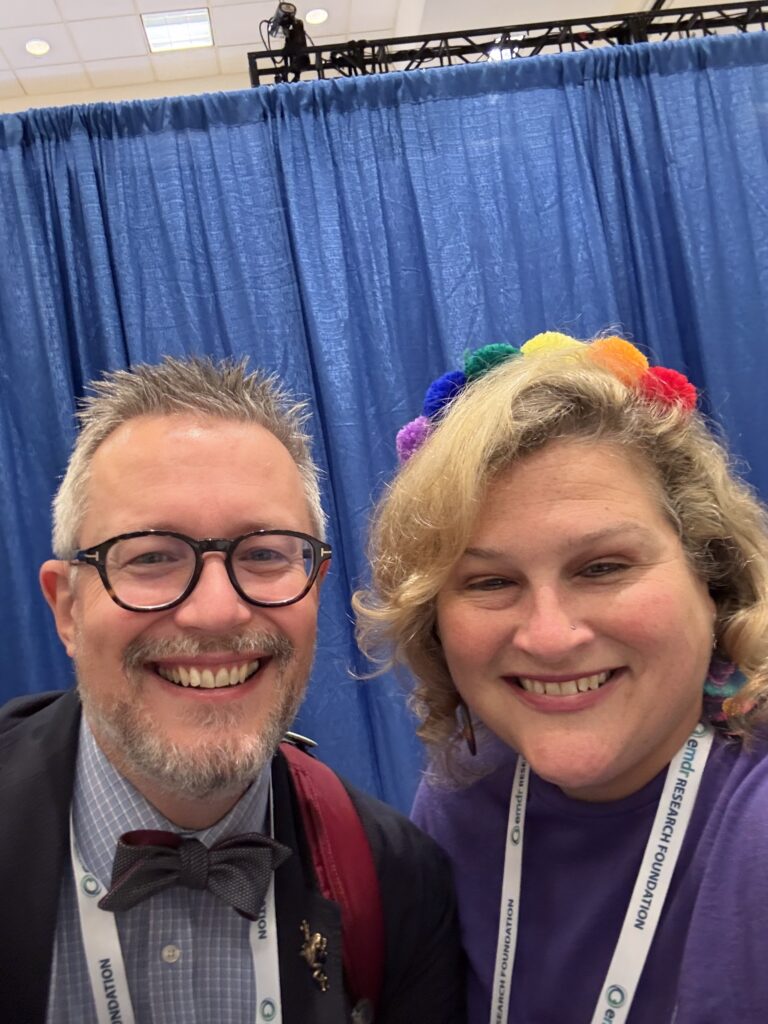
As my conversation with Dr Jamie Marich is released for Pride Month 2026, I want to offer this personal and professional reflection in my own voice. It is a reflection on identity, healing, accountability, and solidarity with LGBTQIA+ communities.
For well over a decade, my position has been clear: I do not support, promote, or practise Sexual Orientation Change Efforts, or SOCE, or conversion practices. I reject any approach that seeks to change, suppress, shame, or pathologise a person’s sexual orientation or gender identity.
That position is consistent with the professional consensus that LGBTQIA+ people do not need to be changed. More importantly, it is a deeply personal commitment. LGBTQIA+ people deserve safety, dignity, affirmation, and respect. Therapy should never have an agenda to make someone heterosexual, cisgender, or more acceptable to others. Therapy should help people live with greater authenticity, freedom, and self-acceptance.
I have had to reflect deeply on earlier involvement with settings and frameworks that wrongly treated change in sexual orientation as a therapeutic aim or possibility. I regret that involvement. I also regret any way in which my past work may have contributed to shame, confusion, or harm. I do not ask those harmed by SOCE or conversion practices to minimise that harm, and I do not expect trust simply because I say that I have changed. Trust has to be earned through consistency, transparency, and conduct over time.
Part of that learning came through listening to LGBTQIA+ people and colleagues, including those in the Rainbow Special Interest Group of the Royal College of Psychiatrists. Part of it also came through my own long-term personal work. Over many years of therapy, including psychodynamic therapy and later EMDR, I came to love and accept myself as a pansexual man. That work also helped me process trauma, loss, shame, and the complexity of my own story. My personal work continues.
I was also part of communities of men exploring sexuality, identity, and what it meant to live with greater authenticity. Some people used the language of same-sex attraction. Some identified as gay. Others used words such as bisexual or pansexual. Some chose not to use labels at all. In those spaces, I witnessed men move away from shame and towards affirmation and self-acceptance. That was also part of my own journey.
Within men’s communities, including the Mankind Project, I sought to contribute to safer spaces for gay, bisexual, and pansexual men. That work mattered to me because I knew, increasingly clearly, that safety and belonging are not abstract ideals. They are essential to mental health.
I have sought to support this community personally and professionally, including through work with colleagues in the United States. In 2019, I presented academic work on EMDR therapy and psychosis in LGBTQIA+ young people experiencing homelessness in Los Angeles. With Jess Converse, I presented a poster at EMDRIA entitled Developing an EMDR Therapy Clinic for Psychosis in an LGBT Homeless Population. The following year, at EMDRIA 2020, Jess and I, together with other members of the supervision group, presented a workshop on EMDR therapy for the trauma of downward social drift in the LGBTQ+ community. This later work does not erase the need for accountability, but it reflects the direction of my practice and commitments over many years.
Respect for diversity and the protection of people who belong to minority communities are values I hold dearly. They are not abstract professional principles for me. They are part of my personal life, my clinical work, and my ongoing understanding of trauma, healing, and belonging.
Inclusion and diversity are central to mental health. Shame, exclusion, rejection, and stigma cause harm. Acceptance, affirmation, and safe connection are protective. My work in trauma has repeatedly shown me that people heal best when they are met with dignity rather than judgement.
I am grateful for the friendships and collegial relationships that have grown from this work, including with Jess Converse, Robin Shapiro, and Dr Jamie Marich. I am particularly grateful for conversations with Jamie, while recognising that this statement is mine alone and that responsibility for my past and present conduct rests with me.
Over the past sixteen years, I have come to a place where I can more fully love and accept myself. I can also recognise the love and affirmation present in my relationships with people of all genders. That has not been a simple or instant process. It has involved therapy, reflection, mistakes, learning, and a willingness to face difficult parts of my own story.
I know that I have not always got everything right. I have made errors in judgement. I have had to learn, and I am still learning. What matters to me now is not the defence of the past, but the responsibility to live differently in the present and to contribute to a safer future.
I am grateful to those who have challenged me, supported me, and helped me keep learning. Growth is not a destination. It is a continuing practice.
As Pride Month 2026 is marked across the world, I want to state clearly that I stand with LGBTQIA+ people, including as someone who belongs to this community. I stand against therapies and practices that seek to change, suppress, or shame sexual orientation or gender identity. I stand for affirmation, diversity, inclusion, and the right of every person to live safely and authentically.
This matters to me personally because people I love belong to this community too. It also matters professionally. Mental health care must be a place of safety, not another place of harm. Therapy should help people heal from shame, not deepen it.
Going forward, I will continue to look for ways to support diversity and LGBTQIA+ communities. I will do my part in helping make the world safer for LGBTQIA+ people to live, love, work, heal, and belong.
Pride is celebration, but it is also protest, remembrance, visibility, and commitment. For me, Pride 2026 is an opportunity to say: I am still learning. I am still growing. I remain committed to accountability, affirmation, and solidarity with LGBTQIA+ people.