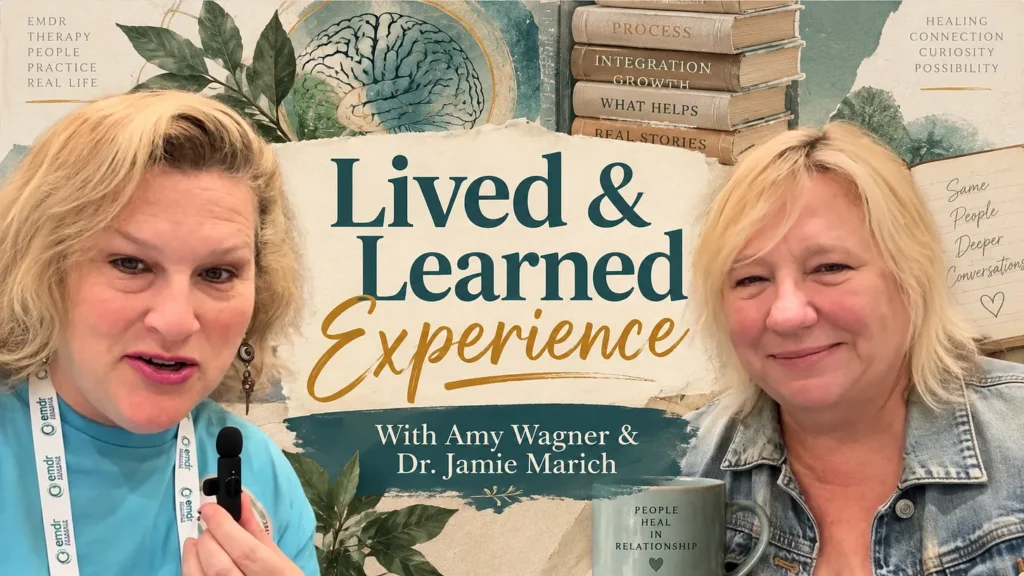
At the 2026 EMDRIA Conference, Amy Wagner presented Both Sides Matter: Bridging Learned and Lived Experience in Trauma Therapy, exploring the important and sometimes complicated intersection between professional knowledge, clinical training, and lived experience. As often happens with a full three-hour conference presentation, time moved more quickly than expected, and Amy was unable to share a planned video contribution from Jamie during the session.
We wanted to share Dr. Jamie Marich’s perspective here as part of the continuing conversation.
The larger invitation of Both Sides Matter is not to elevate one form of knowing over another, but to consider what becomes possible when we make room for both: the knowledge developed through education, research, training, and clinical experience, alongside the wisdom and perspective that can come through lived experience.
Neither needs to replace the other.
Jamie’s important contribution adds another voice to that ongoing conversation, and we’re glad to have the opportunity to share it here:
Jamie’s Note: Since originally doing this interview with Amy in the early part of 2025, I learned that what I call “science supremacy” in the video relates to a similarly coined term: scientism. Dr. Huston Smith, scholar of world religions, used the term in his seminal text The World’s Religions, originally published in 1958 under the title The Religions of Man. Like I do in this video, he cautioned that one can appreciate and regard the findings of science without negating other forms of inquiry, especially the spiritual. Although I am more willing to have dialogue with people on the learned experience side of dissociation and EMDR studies than I was when I originally made this video, my beliefs about the perils of scientism have not changed. Lived experience voices matter. And until our fields regard these as having the same value that we place on the academy and peer-reviewed literature, I fear that we will remain at an impasse.