Like many Americans who recognize the violent, colonial history behind the holiday that we celebrate this week as Thanksgiving, practicing the holiday as it exists in the mainstream is a struggle. The pilgrims and Indians coming together in harmony to celebrate the bountiful harvest was one of many lies that they taught me in elementary school. And it feels very emblematic of how many pretty stories we are given by institutions in order to cover up the real crimes and injustices.
I also have many wonderful memories of Thanksgiving feasts celebrated with family and friends. As a Catholic school kid who was spoonfed the story, I got excited about having four days off in November and getting to eat delicious food. Pumpkin pie, turkey, and mashed potatoes were always a highlight. I remember the first Thanksgiving that we celebrated just a few weeks after my beloved Grandmother Lucy’s death in 1995, as my mother emotionally prepared her chicken noodle soup recipe in tribute. And I remember Thanksgiving weekend 2000 when I experienced my first moment of clarity. In that clarity, I knew that I had to get sober and make some major changes in my life.
In recent years I’ve come to celebrate Thanksgiving not as revisionist history, rather, as a celebration of gratitude. Gratitude is a practice for me, a practice that became important in my addiction recovery. Many people who identify as being in recovery, especially those who walk or have walked a 12-step path, credit gratitude practice as vital to getting sober and staying sober. In fact, there are so many meetings in November with the theme of gratitude, it can cause some eyes to roll.
“Here we go again, talking about gratitude in November!”
I, for one, am grateful for the obvious yearly reminder. Cultivating a sense of gratitude played a massive role in me getting (and remaining) well. It is always worth celebrating.
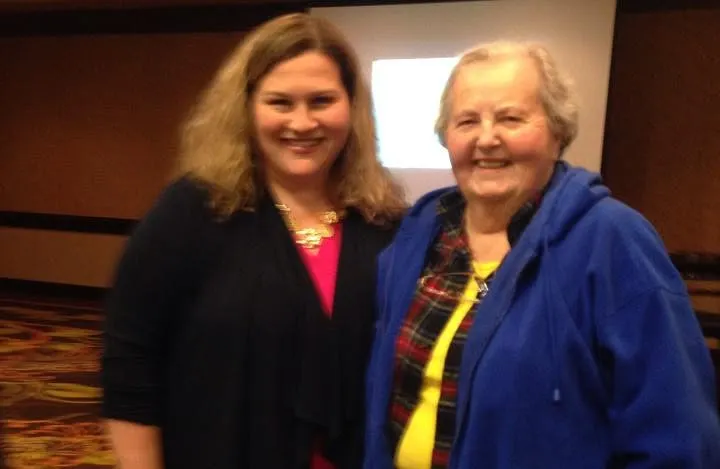
My first recovery sponsor Janet Leff, who I write about extensively in the Trauma and the 12 Steps books, taught me about gratitude as a practice during my initial exposure to 12-step recovery. Whenever I would complain about something, she would patiently listen…and then encourage me to make a gratitude list. Sometimes she would guide me to make a general gratitude list, naming the things I had access to in the present, things that so many people in the world could not access. Things like food, water, a place to stay, friends that cared…
While some people might criticize the practice as being trauma-inducing, harkening back to the times in our lives when people would shut us down by reminding us of “how much we had to be grateful for,” that was never Janet’s intention. She wanted me to be able to put things into perspective and recognize that my life, in this moment, was not all bad. And feeling into that viscerally would keep me from going into a spiral of self-pity. Such a practice and intention was life-saving, because getting sucked into those spirals of self-pity would often lead me to drink, to use drugs, or engage in other unhelpful behaviors.
If Janet really wanted to give me a “bonus round” on this practice, she would have me write a gratitude list around the person, place, or thing about which I complained. Trouble with work and the boss? She’d advise me to make a list of at least five things I could be grateful for about that boss and that situation. Sometimes item one on the list was as simple as, “I have employment today. I don’t have to be here forever, yet for today I am grateful for the paycheck.” She would accept me putting down gratitude about the things that the people I worked with were teaching me about myself and who I didn’t want to become as a person. To this day, when I think of the most challenging jobs I’ve had in the mental health and addiction field, I can honestly say, “I am grateful for everything I learned at that place about how not to be a therapist.”
Reflecting back on my early sobriety, I am grateful that I ended up getting sober in Bosnia-Hercegovina in 2001 (first attempts) and 2002 (the year of my eventual “sober date,” 7/8/02). How I got there is a long story that I get into in both Trauma and the 12 Steps and explain further in You Lied to Me About God: A Memoir. To summarize, what started as a geographic cure, moving back to my ancestral homeland to “find myself,” ended up being something that my Higher Power used to bring people like Janet into my life, people who would teach me how to get sober and well. Even though I came to Bosnia with a whole host of trauma-based issues that were keeping me stuck in my life, traumas that Janet would be the first to validate, I was still a bit of a spoiled, privileged princess. I grew up in a solidly middle class American family where I wanted for nothing, at least at the material level. And I found it difficult as I entered into adulthood to deal with the stresses that life was asking me to accommodate. I wanted people to fix things and to do things for me. In the spirit of two things can be true at the same time, even though I was suffering a great deal in my unaddressed trauma, my ingrained privilege could bring up the problematic self-pity in a heartbeat.
So living in a country that was recovering from a war and the fallout of communism gave me a much needed reality check. In October 2001 during that first year I was attempting to get sober, I ended up in a hospital in Mostar, Bosnia-Hercegovina with an appendix that was about to rupture. To be clear, the surgeon who operated on me kept me alive. I am grateful for him and his talents. Yet I experienced the Eastern European misogyny I grew up dreading when the doctor wouldn’t speak to me about my care directly, asking to speak to my husband or my father. When I told him I didn’t have a husband and that my father was in the United States, he gruffly said that he would treat “the priest” (my boss) as my father. He would only communicate with him. There was not any toilet paper in the hospital, you had to have someone bring it if you wanted it, and I still felt air coming in through the bullet holes in the walls from the war that ripped through Mostar only years prior. The walls surrounded me in a ward that I shared with nine other women.
The experience made me grateful for privacy and grateful for the little things… like toilet paper. To this day when I make gratitude lists, toilet paper is on it. In early 2000s Bosnia, an appendectomy was a major surgery, not a laparoscopic procedure like in the United States, so I was in the hospital for a week. Informed by Croatian superstition about grievous illness potentially resulting from a combination of having wet hair and catching a draft, I was forbidden to shower. When I got out of the hospital, I relished that first shower and the simple pleasure it brought me. Ever since then, I see every opportunity to take a shower, to get clean, and to interact with water as a gratitude. A gratitude that keeps me afloat and even propels me to needed perspective. With this perspective I can at very least stay sober. On the harder days of my life, the perspective that gratitude brings allows me to preserve my sanity!
What are you grateful for today? You might be asked at your family gathering to go around the table and state something you’re grateful for. I know that this can make us feel put on the spot sometimes, yet it is a ritual that I relish. And if you feel that you can’t publicly articulate your deepest gratitudes around your family or friends, consider making it a contemplative practice for yourself. Take it to the page. Express it with your body. Say it through your prayers. Show it with where or how you choose to spend or donate your money.
As declared in the “Big Book” of Alcoholics Anonymous: “Gratitude is action” (pg. 510).
What is your action? A dear friend of mine, Dr. Kellie Kirksey, asks this question of us all the time in her advocacy work. It’s a marvelous question that always gets me to think.
Today, I am beginning to see that in my action lies my gratitude.
Join Jamie for a “Trauma and the 12 Steps” Retreat at Wilson House (the birthplace of Bill W.) in Vermont, May 14-16, 2027. For more information and to register, go to: https://wilsonhouse.org/trauma
Wanting to support Jamie’s writing and unable to commit to the yearly subscription on Substack? Consider visiting the Virtual Tip Jar to donate via your favorite online platform as a thank you for this article or any of her independent content