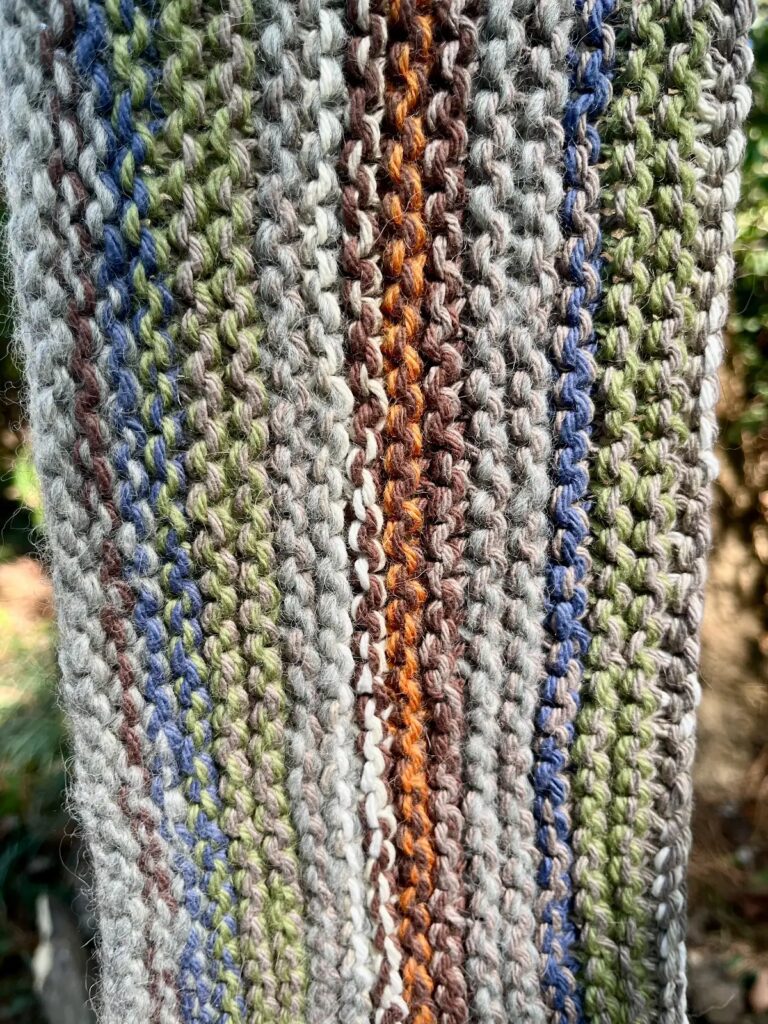
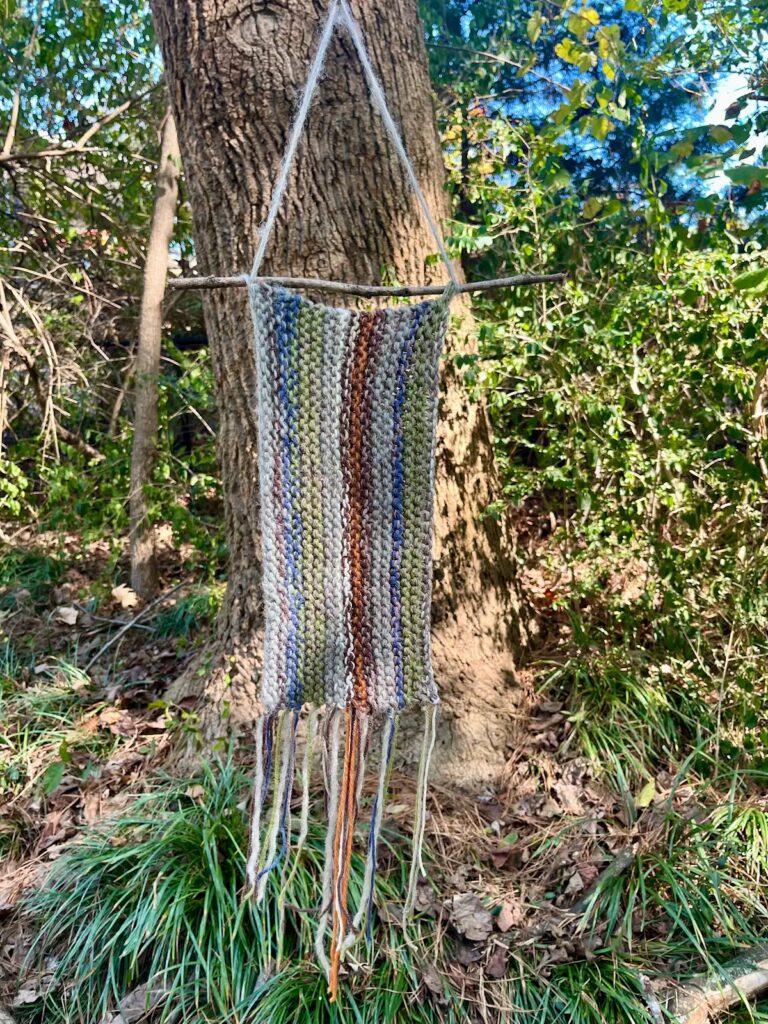
The strands of wool of the tapestry are knit together in unique combinations and patterns that
depict the connections and dynamics among my parts. From a distance the tapestry appears to be
a single color or shade. However, when the tapestry is viewed more closely and oriented so that
it faces the light, the details of the individual fibers, variations, texture, and pattern can be seen.
When the tapestry is stretched out or expanded, more light is able to pass through the spaces
between the individual fibers, and the tapestry can take on a different shape while retaining its
overall form and composition. This is similar to how a moment of impact by external factors and
stressors on an internal system of parts can allow us to discover the roles, functions, needs,
and identities of parts that are expressing emotions, sensations, impulses, etc. at that moment in
time. These moments are an opportunity to build a functional understanding and develop a
deeper relationship with parts through curiosity and attunement. The individual strands of the
tapestry are each distinct but together comprise the fabric of the whole. This imagery allows me
to explore the therapeutic concepts of co-consciousness and functional multiplicity in contrast to
the concept of singular erasure of parts in traditional clinical concepts of integration or fusion.
The tapestry imagery also reminds me of the importance of slowing down with curiosity,
honoring differences, and providing resources to deepen internal understanding, attunement, and
collaboration with the parts as a clinical approach to parts work with dissociative clients and
systems. The tapestry is made of wool yarn fibers which naturally soften and “bloom” through
tending and care. These natural qualities of wool yarn fibers include being hypoallergenic, fire
resistant, and thermoregulating.
The fibers also have a “memory” and will remain in a more flexible state over time when they
are consistently and repetitively tended to with touch, wear, and care. Thus, the individual
strands of the tapestry are joined together into a fabric of warmth, comfort, and self-expression to
represent the strengths and adaptive capacities of a system of parts, as well as the need for
understanding and care. These metaphors represent the clinical process of guiding clients
through self-soothing skills, self-care practices, and consistent acknowledgement of
parts’ protective functions and strengths to develop greater flexibility and internal collaboration
within a system of parts.

The process of hand-knitting the tapestry served as experiential learning about the ongoing and
embodied practice of intention and repetitive actions that soften and strengthen a system of parts
over time. The project was also an opportunity to consider how my understanding of my
dissociative profile and an active relationship with my parts influences my professional capacity
in therapeutic clinical work. Through the rhythmic and sensory experience of bilateral knitting
motions, I gained insights on pacing, trusting the process, use of metaphor, and creative practices as actionable methods of therapeutic intervention. The combination of creative and expressive
therapies with client-centered parts work provides clients with a comprehensive and
experiential approach to identify and explore internal or dissociative experiences that may be
difficult to access through verbal reflection alone. My intention in translating these insights into
my clinical practice is to collaborate with clients in healing with complex trauma and
dissociation through deeper curiosity, humility, and respect for their individual lived experiences
and parts. I look forward to continued self-reflection and creative practices with my parts as a
tool for professional development and translating personal insights into ethical and responsive
clinical care.